


Brief notes on librarian as designer.
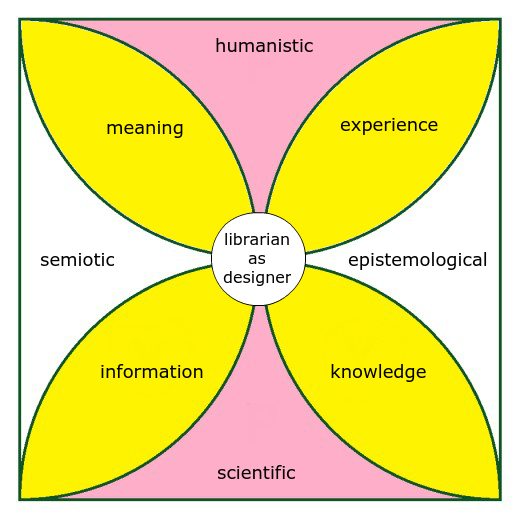
The shift: Library science -> Information Science only tells part of the story. Science is an inadequate model, as is information.
The dominant paradigm: Information -> Knowledge is incomplete.
Librarians must be attentive to meaning, not just information/knowledge.
Epistemology -> Semiotics but ultimately the core of librarianship is experience design.
Aesthetics then, becomes a core concern and the librarian’s new pedagogical model should be design school, specifically social design. [1]

[1] A case could be made for curatorial studies, and although insights from the field would surely aid librarianship, it lacks some fundamental skill sets of design.
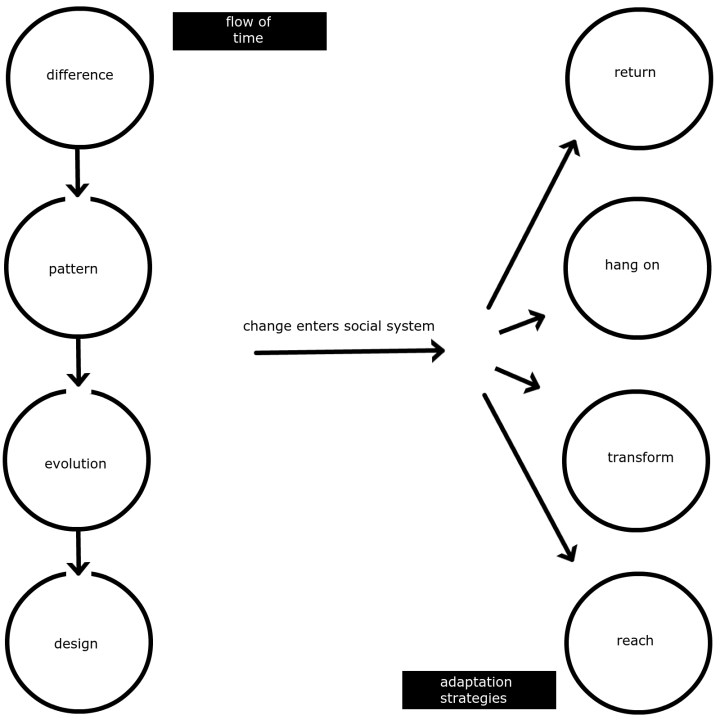


Intensification without representation – a recipe for collapse
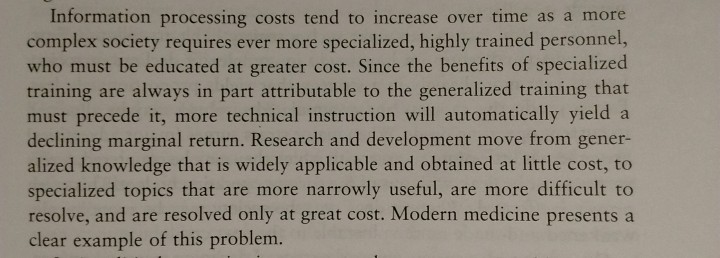
Inspired by M. Jahi Chappell (title above), Ivan Illich (relationship of energy consumption, social/economic inequality, and specialization) and Joseph Tainter (quote below). Needless to say the arts are subject to the same law of declining marginal returns. Also note that there is immense energy consumption involved in administrators maintaining the social coercion necessary for institutional buy in from the administered.
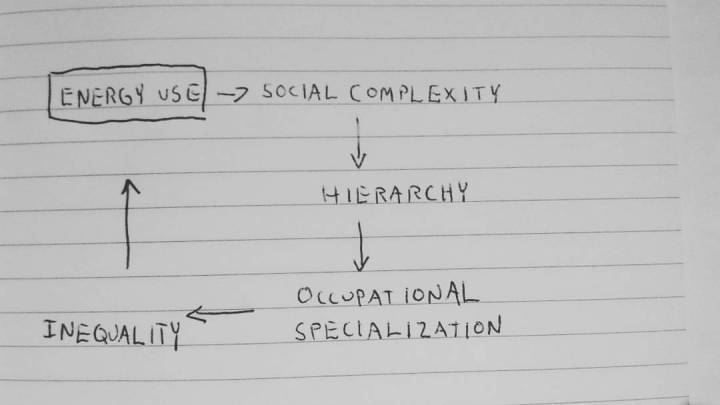
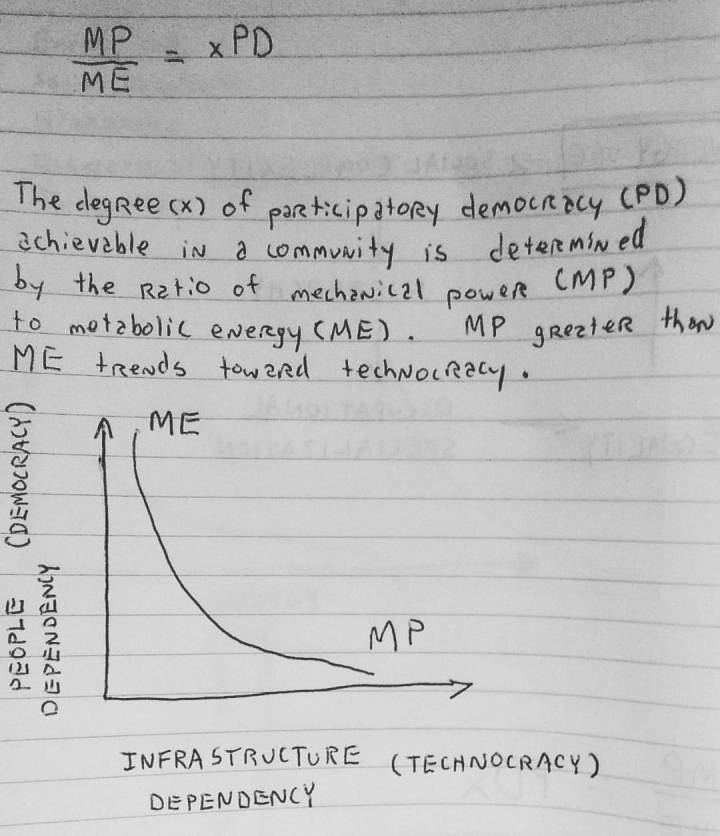

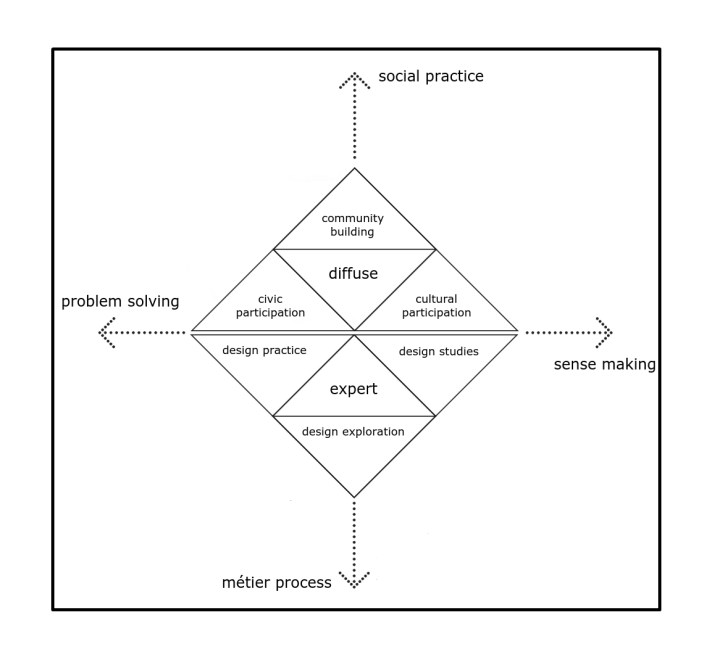
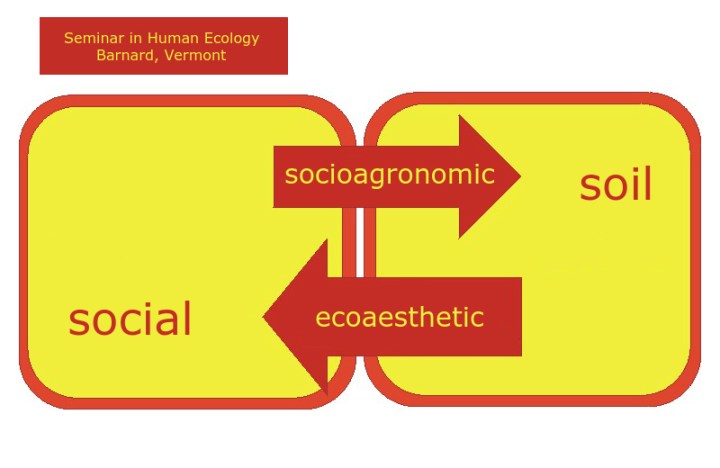
#soilpractice + #socialpractice coordinates with (mostly) unrelated notes

Facebook comment of mine:
And thus the arts are subjugated to the disastrous apparatus constructed by the Enlightenment cleaving of self/other. One of the most egregious examples of this is the forced submission of all manner of creative play to (linguistic) domination in the form of “criticality,” which is a technique of dissociation that replicates the very mistakes that its proponents seek to solve using it as a tool!
“Criticality” as fertilizer
Initial applications lead to tremendous yields while ultimately degrading the ecological substrate. Everywhere the miraculous results are lauded as revolutionary, liberating us from various “externalities.” Criticality/fertilizer is seen as a cure all – making a degraded condition seem easily rectified while masking the fact that said cure alls are the mode of degraded experience itself. Criticality/fertilizer is supplied by large centralized institutions under the auspices of empowerment, but it really means a lifetime of debt and dependency.


A continuum along which soil practice and social practice occur
From notes today:
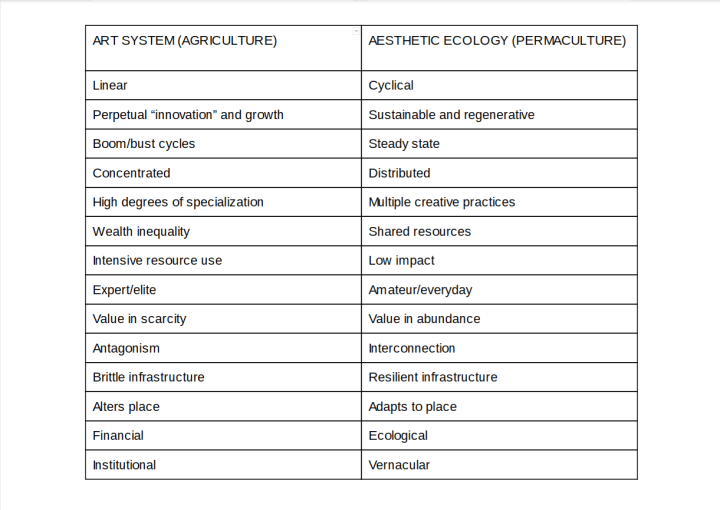
the art system has become industrial agriculture
aesthetic ecology as gardening – learn from your grandmother and your neighbor, pick up some magazines or books, watch some YouTube videos and get growing, no gatekeepers, no degrees required
the art system says the only real gardening is done by experts
seed saving (AE) vs. industrial ag research (AS) – person to person innovation (AE) vs. institutionally controlled validation (AS)
museums, galleries, and universities act much like Monsanto taking up vernacular practices, formalizing them, squeezing the living core out, and controlling their distribution and viability
aesthetic ecology favors diversity – formal, institutional practices, but also backyard gardeners, community gardeners, homesteaders, etc



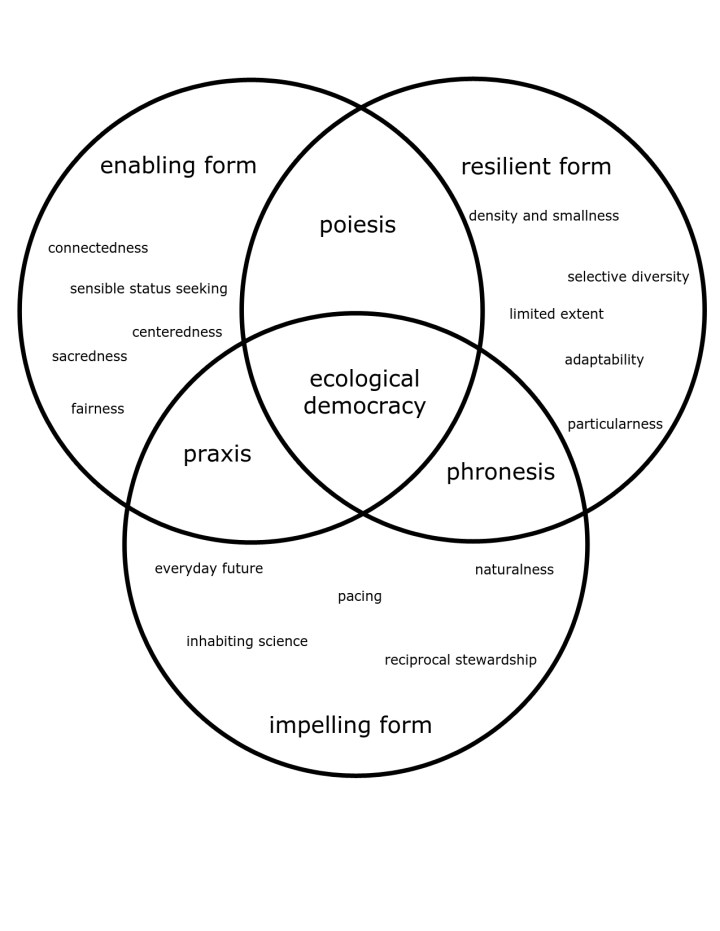

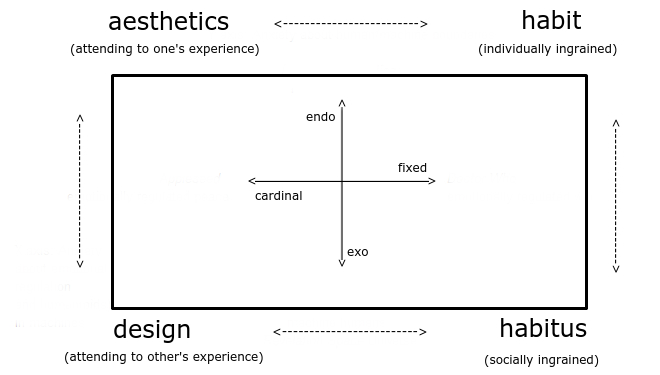

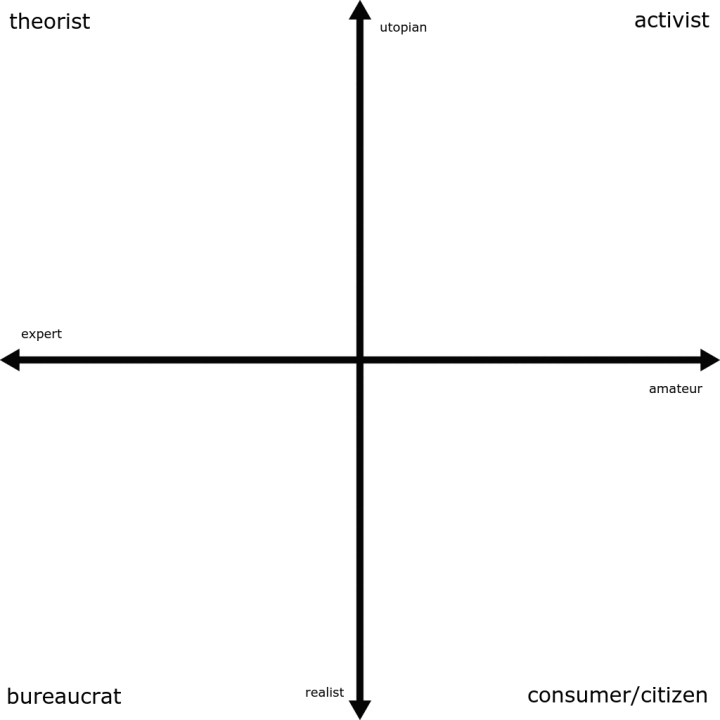


Social practice in an expanded field: against art historical noodling and for Sunday morning doodling

…But I remain interested in social practice to the degree that it remains social practice, rather than social practice *art*. So when we inquire into the aesthetics of participation for instance we don’t get bogged down in all the art historical noodling that paralyzes so many critics from the old school. It is important to emphasize that all kinds of “problems” are solved by recognizing that art [frieze/e-flux/triple canopy type art], is just a highly specialized and mostly pointless parlor game played with, and within, aesthetic experience. If we remain attuned to aesthetics and aesthetic experience (especially from an embodied, phenomenological point of view) or to “the arts” or “the art of” or “the artful” rather than to Art, we increase the chances of having the “dynamic, complex and difficult dialogues” *** seeks rather than the insular professional tiffs of the Art world.

a minimal equation: social poiesis + social praxis + social phronesis = social practice

This image is an expansive understanding of social practice, more expansive even than “social poiesis” which I have previously argued for:
“social poiesis” (despite its even more obscure quality) might be a better term. If we don’t limit ourselves to art, social poiesis (nee practice) could be more dynamic and encompass not only art actions and art environments, but also – urban planning, sports leagues, communes, be-ins, residencies, raves, state fairs, theme parks, cults, encounter groups, chautauquas, even nations…and would also apply to a much broader demographic of participants rather than artists and their audiences…
life is always lived in some present – social practice as artful living

“The promise of Dewey’s aesthetics is not merely in providing an airtight definition of art or a theoretical reading of the relationship between art and moral value. Instead, Dewey theorizes to meliorate or improve lived experience. The insight of Dewey’s work on art is that what makes art aesthetic is not any particular property of that particular human practice, but rather its tendency to encourage the sort of absorptive, engaged attention to the rich present that is so often lost in today’s fragmented world. The way to substantially improve our experience is not by merely waiting for the material setup of the world to change, but instead lies in the intelligent altering of our deep-seated habits (orientations) toward activity and toward other individuals…Life is always lived in some present, and it is here that the battle of life is fought; one can come armed with habits that foster engagement with that present, or one can bring in ways of viewing the here and now (be it an art object or a work task) as a mere means to achieve something in the remote future. Both of these approaches will affect and tone the quality of lived, transactive experience. Dewey’s point…is that the former approach is constitutive of artful living.” – Scott Stroud


leave a comment